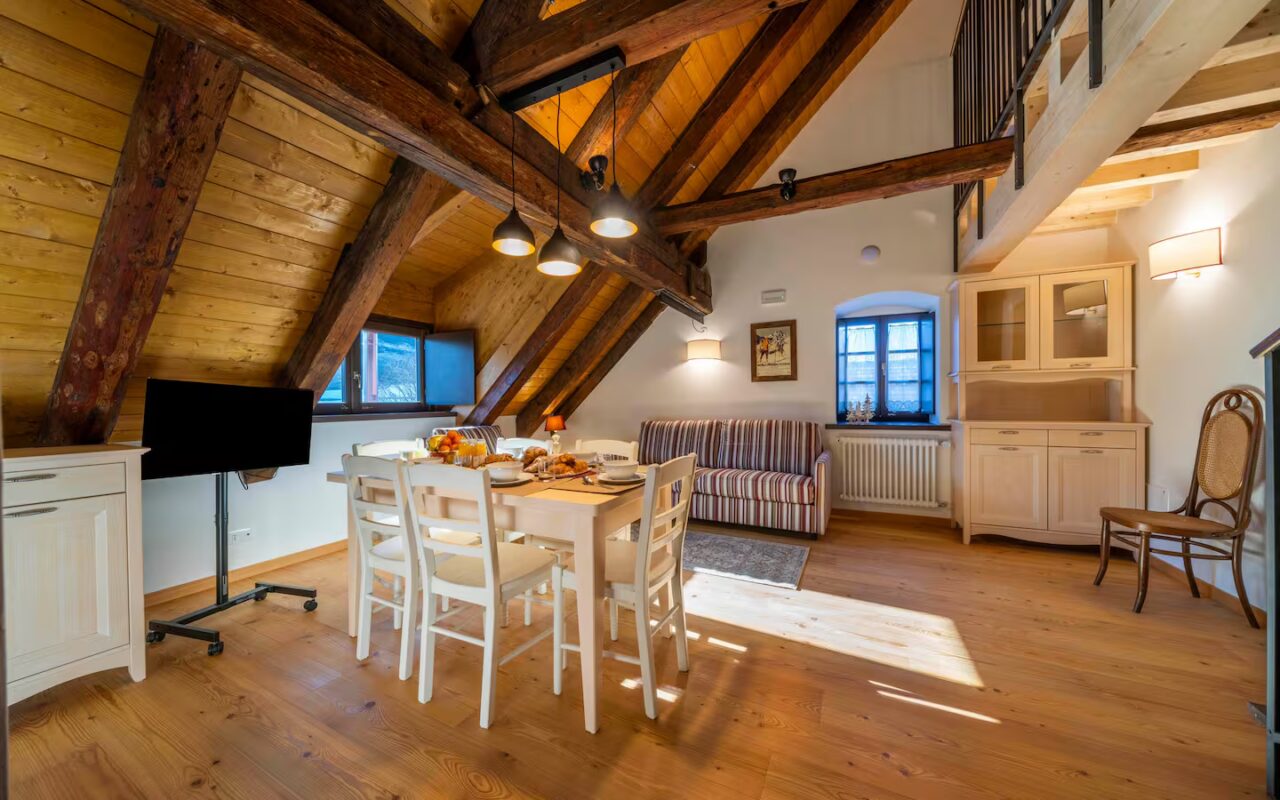
Apartment G – Saisera
Quick zephyrs blow, vexing daft Jim. Sex-charged fop blew my junk TV quiz.
Details
- Guests: 4
- Size: 77m²
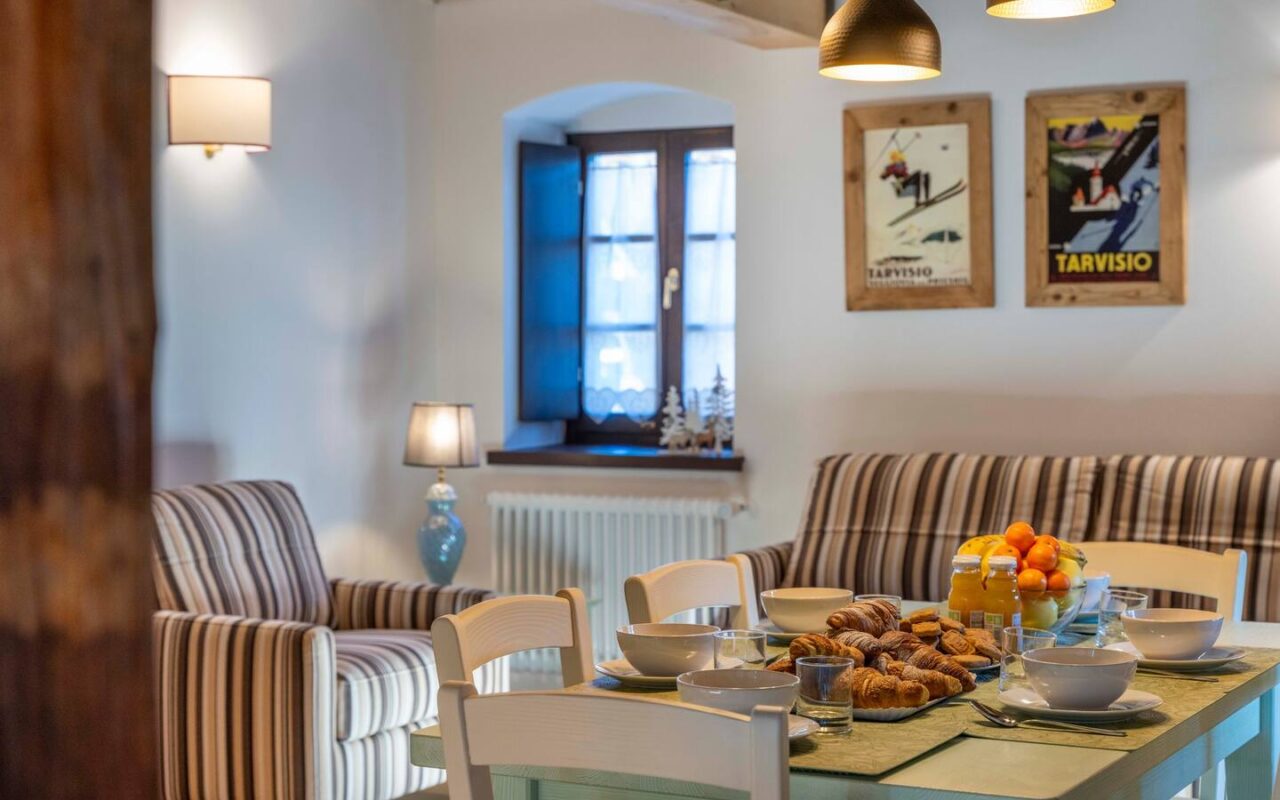
Apartment F – Lussari
The European languages are members of the same family. Their separate existence is a myth.
Details
- Guests: 4
- View: Cucina, soggiorno, 2 bagni, 3 stanze
- Size: 84m²
- Bed Type: 1 letto matrimonale + 4 letti singoli
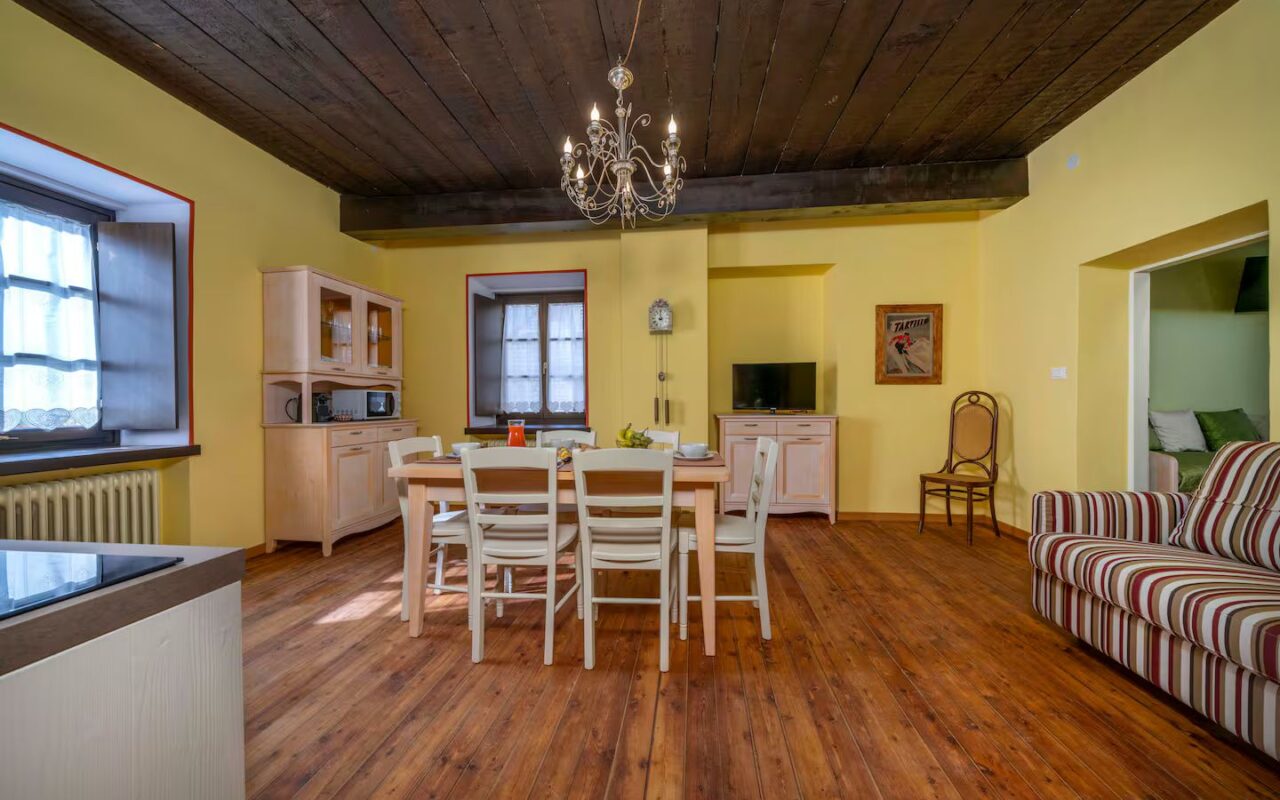
Apartment E – Fusine
But I must explain to you how all this mistaken idea of denouncing pleasure and praising pain was born
Details
- Guests: 4
- Size: 65m²
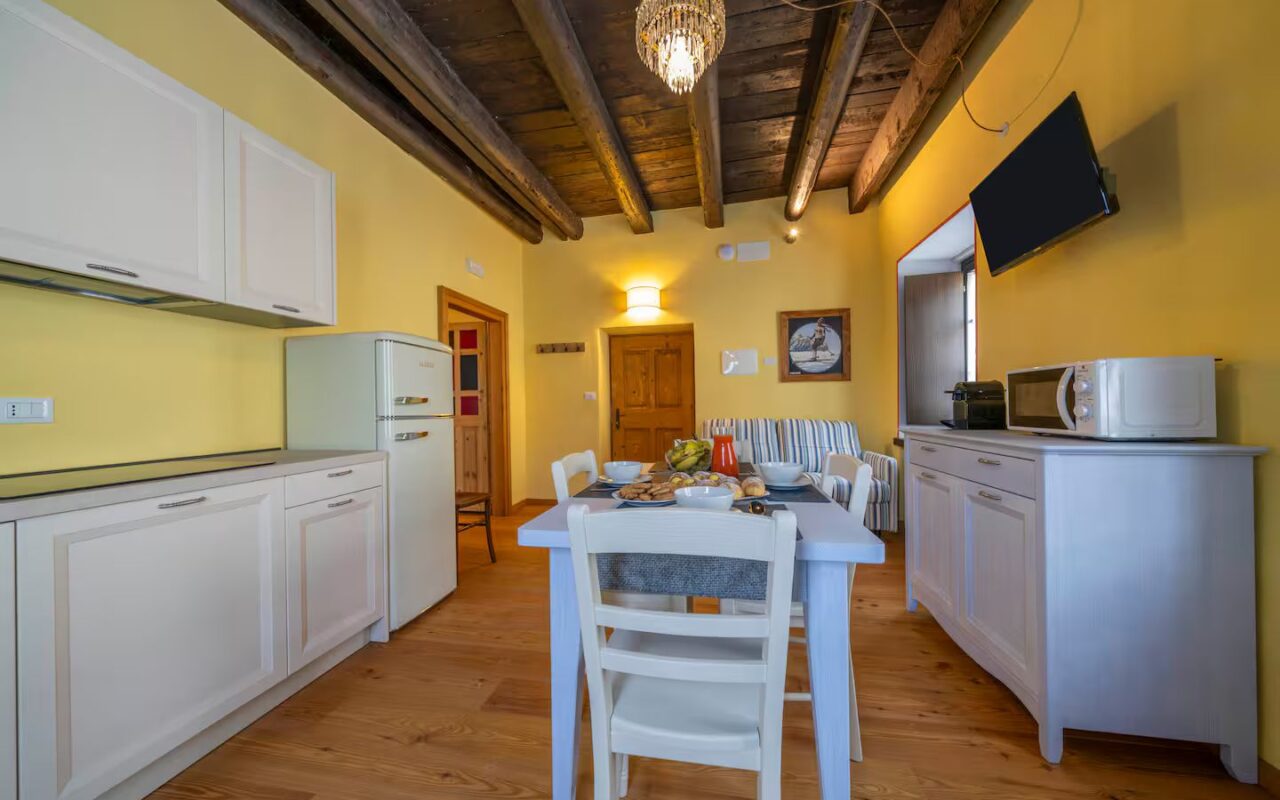
Apartment D – Bartolo
On the other hand, we denounce with righteous indignation and dislike men who are so beguiled.
Details
- Guests: 2
- Size: 49m²
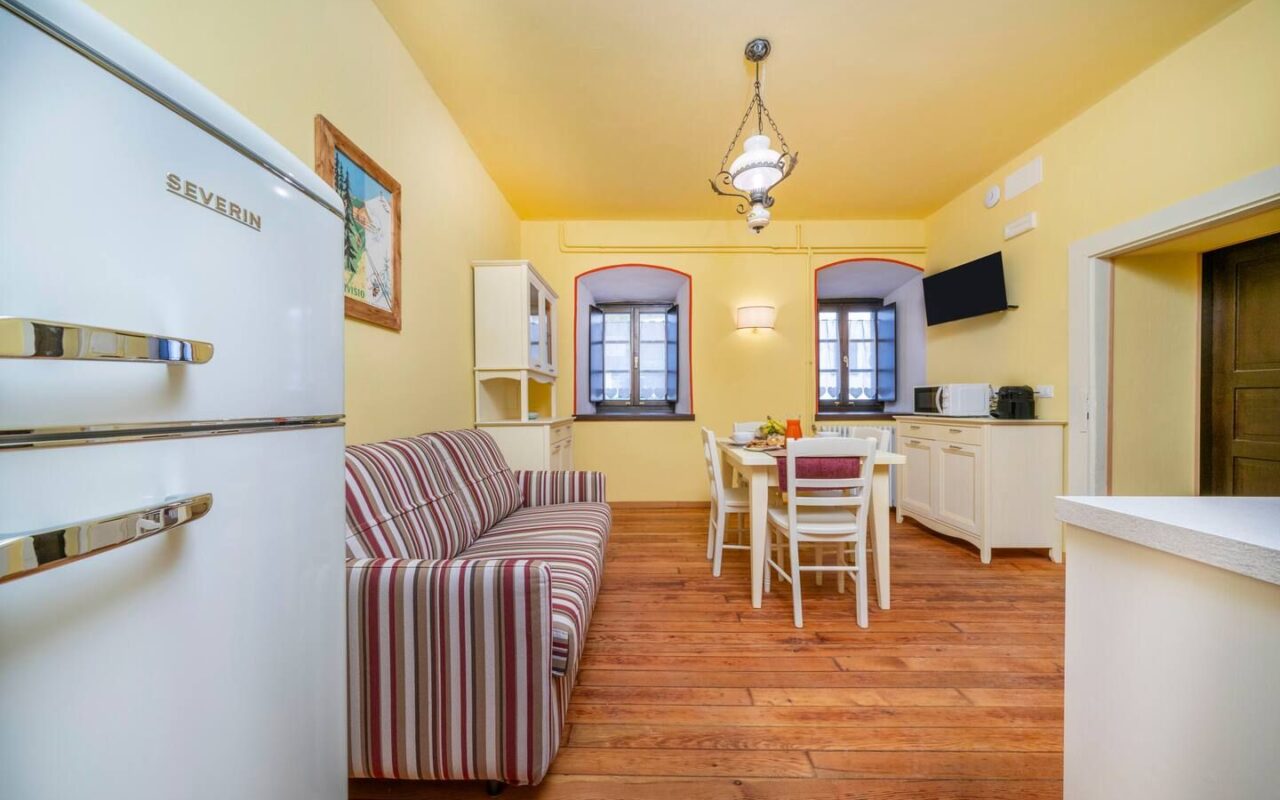
Apartment B – Predil
The wise man therefore always holds in these matters to this principle of selection: he rejects pleasures to secure other greater pleasures.
Details
- Guests: 2
- Size: 37m²
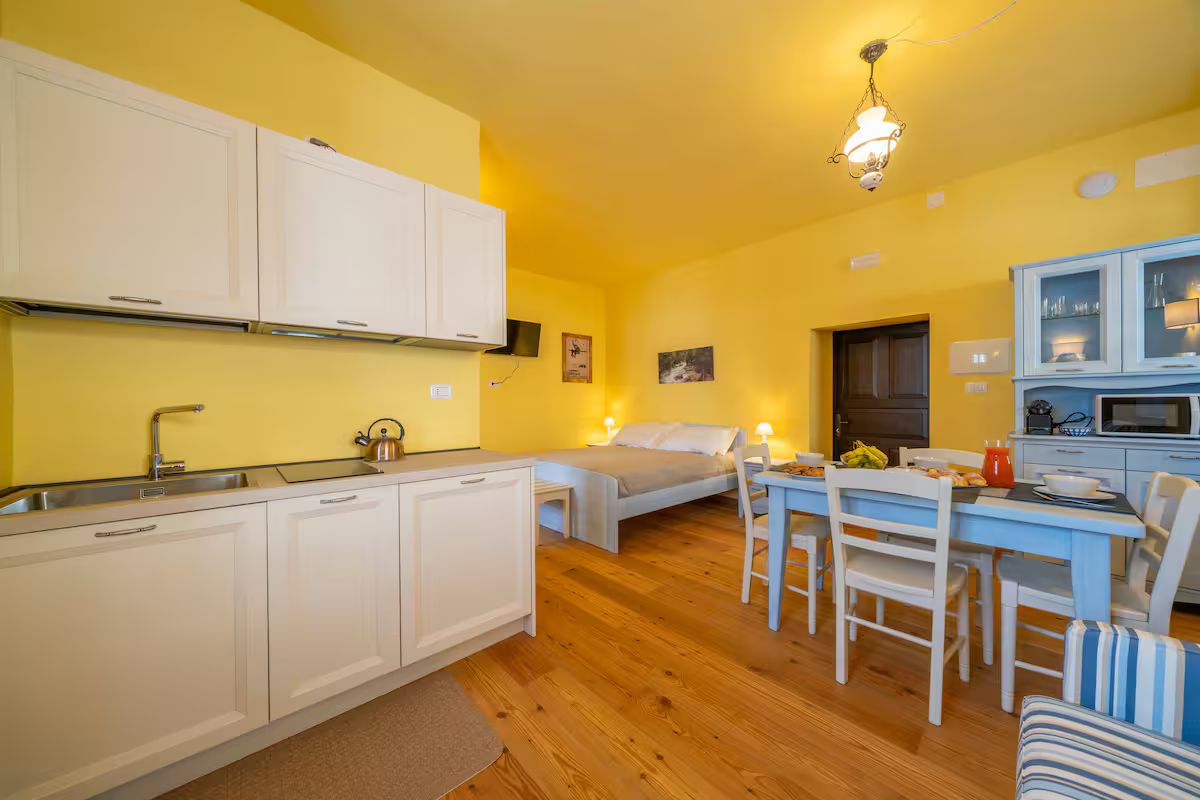
Apartment A – Slizza
These cases are perfectly simple and easy to distinguish. In a free hour, when our power of choice is untrammelled.
Details
- Guests: 1
- View: Vista sulla montagna
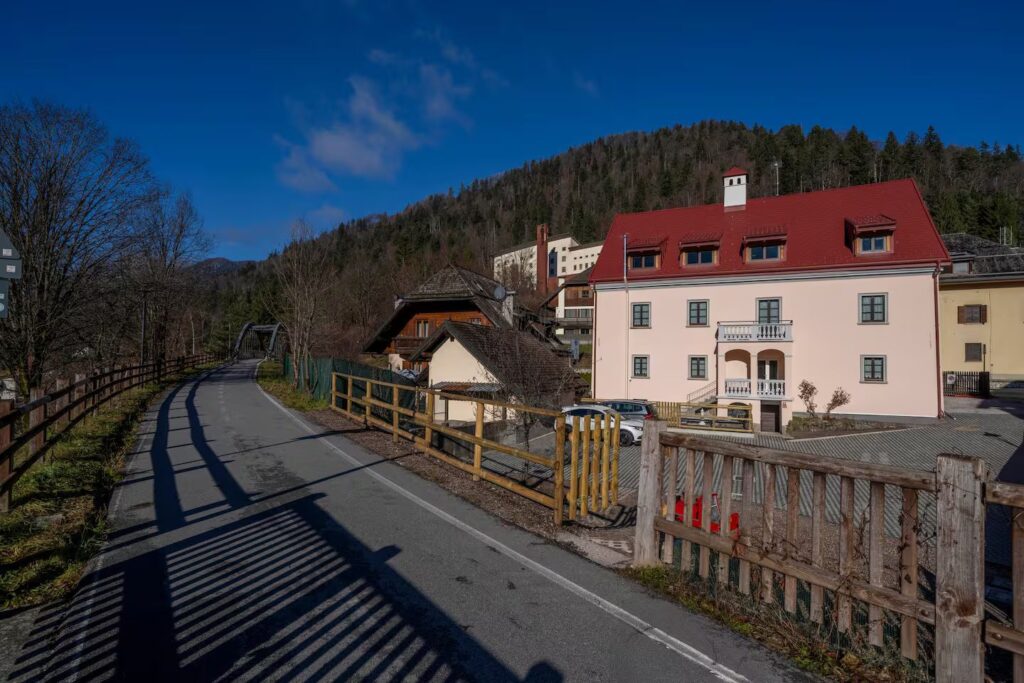
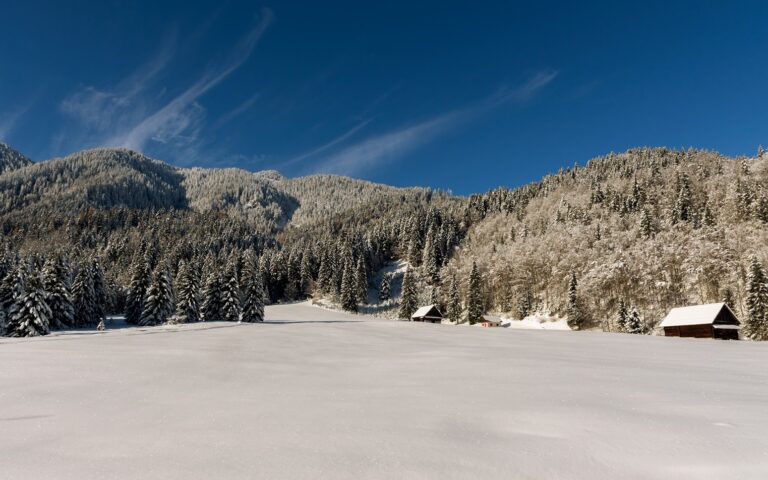
Camporosso and the Bartolo Valley
Located a few kilometers from Tarvisio, Camporosso is a strategic hamlet for mountain lovers. In winter, it is close to the Tarvisio-Monte Lussari ski resort, making it an ideal base for winter sports.
Val Bartolo is a quiet valley that extends from Camporosso to the Austrian border. With its 15 km of flat trail, it is perfect for hiking or snowshoeing, and is also suitable for families.
The Camporosso meadows are crossed in summer by those following the Alpe Adria cycle path, and in winter by those who enjoy alpine skiing (the end of the Di Prampero trail that descends from Monte Lussari) and cross-country skiing (Camporosso ski school).
The hike also begins in Camporosso, and after about 6 km and with minimal elevation gain, it passes through forests of beech, fir, black pine, and Scots pine, leading to Prati di Bartolo with its huts and barns.
The trails then branch off, passing the Bartolo saddle and continuing into Austria.
We recommend this hike both in summer (the Baite Aperte festival at the end of August is very popular) and in winter with snowshoes
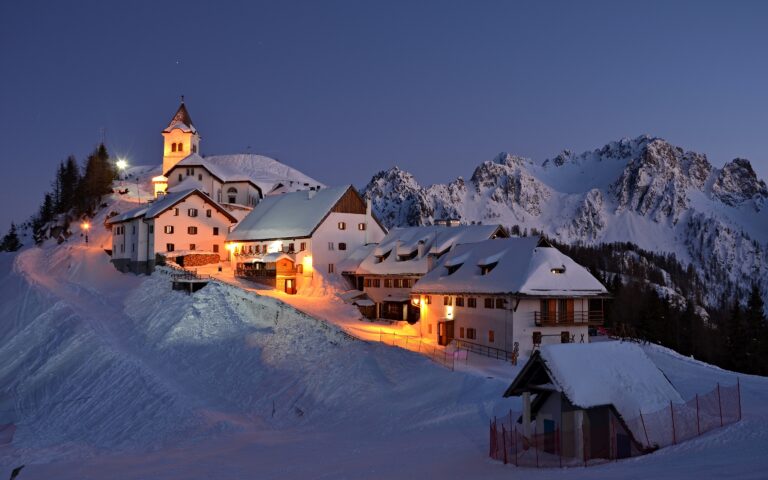
Mount Lussari
Mount Lussari, located at an altitude of 1,789 meters, is one of the most fascinating destinations in the Julian Alps. This place is known for the Sanctuary of the Madonna del Lussari, dating back to the 14th century, which is an important pilgrimage center for the Italian, Slovenian, and Austrian communities. In addition to its spiritual significance, Mount Lussari offers breathtaking views of the surrounding peaks, including Jôf di Montasio, Jôf Fuart, and Mangart.
It has been a place of pilgrimage for the Italian, Friulian, Austrian, and Slovenian populations since 1500.
In the village, reachable by cable car or via the Pilgrim’s Path, you’ll find yourself in the heart of the Julian Alps with views that span the rock faces of Jof di Montasio, Jof Fuart, and Mangart.
In the highest village in Friuli Venezia Giulia, you’ll find numerous welcoming inns offering traditional cuisine.
Lussari is also a ski resort. The Di Prampero slope, which descends towards Camporosso and Tarvisio, is nearly 4 kilometers long with a vertical drop of nearly 1,000 meters. It has hosted Alpine Skiing World Cup and European Cup competitions.
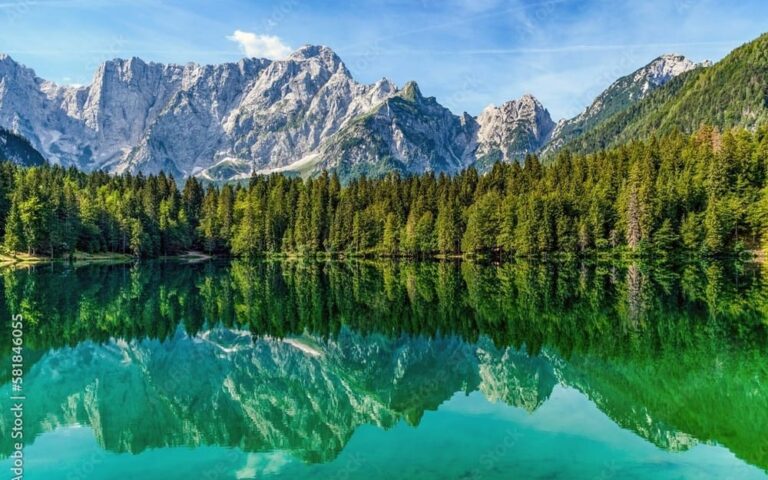
The Fusine Lakes
The Fusine Lakes are two splendid glacial lakes nestled among the majestic Julian Alps. Known as the Upper and Lower Lakes, these bodies of water offer breathtaking scenery, with crystal-clear waters reflecting the surrounding peaks, including the majestic Mount Mangart. Their glacial origins and location in a natural amphitheater make them a must-see destination for nature lovers and hikers.
They comprise the Lower Lake and the Upper Lake, of glacial origin, very close to each other.
They will captivate you with their ever-changing atmospheres and colors throughout the year.
It’s a perfect place for a relaxing day by the water’s edge, for an easy walk that allows you to walk the entire lake, or for a more challenging hike along the trails that climb the surrounding mountains.
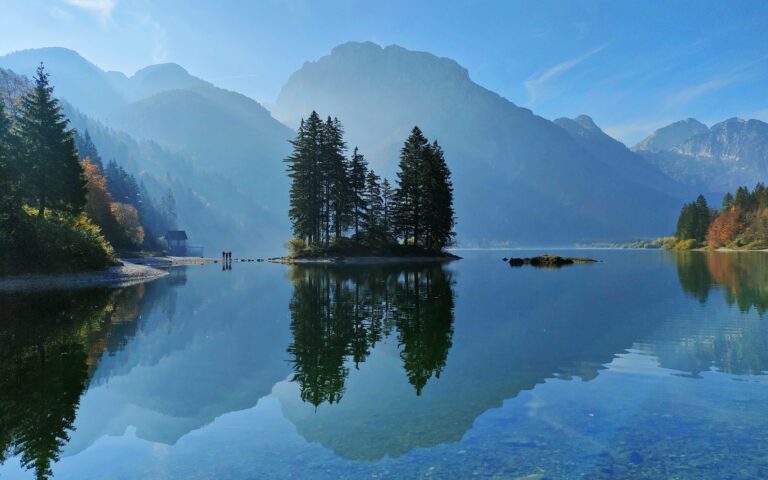
The lake and mines of Raibl (Predil)
Lake Predil, also known as Lake Raibl, is a charming Alpine lake located about 10 km from Tarvisio, in the heart of the Julian Alps. With its crystal-clear waters and surrounding mountain landscape, it is an ideal destination for nature lovers and outdoor enthusiasts.
It is a mountain lake of likely glacial origin, located near the hamlet of Cave del Predil and at the foot of the pass leading to Slovenia.
A perfect summer destination for a refreshing rest or a swim in its clear waters, it is also worth visiting in winter when it is covered in ice and snow.
A stop in the village of Cave del Predil is highly recommended, as it offers an electric train ride to the lead and zinc mines. Mining activity was documented as early as 1320 and ended just a few years ago in 1991.
The Saisera Valley
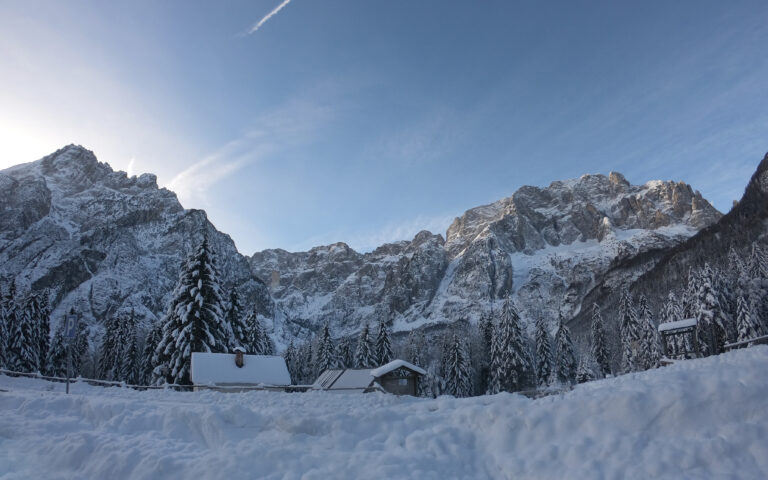
The Saisera Valley, located above the village of Valbruna in the municipality of Tarvisio, is one of the most captivating valleys in the Julian Alps. Known for its breathtaking landscapes, it offers a unique combination of pristine nature and outdoor activities.
The Saisera Valley extends for approximately seven kilometers southward, is crossed by the Saisera River, and is surrounded by the peaks of Jôf Fuart (2,666 m) and Jôf di Montasio (2,754 m).
In summer, it’s an ideal place for walks in the valley floor, hikes to the Pellarini and Grego refuges, or climbing.
In winter, you can explore kilometers of cross-country ski trails in complete solitude amid the silence of snowfall; snow is always guaranteed because the mountains bordering it to the south keep temperatures low.
The valley is also known for the so-called “resonance” spruce found in its forests and highly sought after for the production of very high-quality musical instruments.
The Slizza river gorge
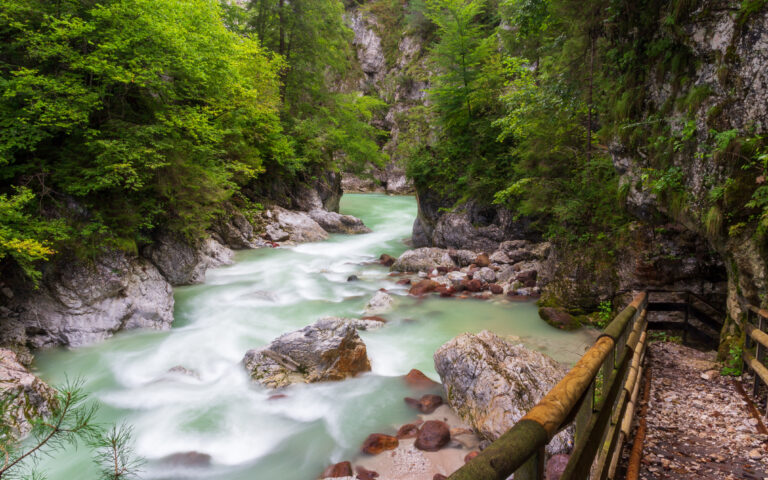
The Slizza Ravine is a picturesque natural gorge located near Tarvisio. This canyon, carved out over millennia by the Slizza stream, offers a roughly 2-kilometer hiking trail, easily accessible and suitable for families and children.
Despite its name, the Slizza Ravine is a beautiful nature trail located not far from the center of Tarvisio in a deep gorge carved by water.
Finally constructed in 1874, it remained impassable for many years starting in 1930, and was then restored in 1999.
Crossing walkways, wooden bridges, and hand-dug tunnels, you can explore this roughly 2-kilometer trail, suitable for children and families, while always remaining a few meters above the Slizza stream.
You’ll find small beaches where you can rest with your feet in the water, large rocks for sunbathing, and spots where you can stop for a picnic.
The town of Tarvisio
…the town, with its meadows, streams, the hills rising up nearby, its woods, and the orography of the Slizza stream, forms a natural setting of uncommon panoramic beauty…
[from the Decree for the Protection of the Tarvisio Territory Ministerial Decree of 15/05/1956]
Tarvisio: a mix of culture
Stopping in Tarvisio, even for just a few days, you’ll hear different languages—Italian, Friulian, German, Slovenian—you’ll learn about the popular traditions and folklore of diverse cultures, and you’ll discover the distinct flavors of Friulian, Carnian, Carinthian, and Slovenian cuisines in the food.
This diversity is fostered by the fact that the Tarvisio area, like much of Friuli, has for centuries been a transit point between the Veneto-Po plains and the regions of Central and Eastern Europe, and the passage of so many peoples has facilitated the circulation of ideas, people, and goods.
The village dates back to Roman times, and its history continues into the Middle Ages, when, starting in 1007, it became part of the Bishopric of Banberga.
Centuries of rural and then commercial development followed, with the granting (1456) of an annual fair that still survives today, and thanks to the transit route between Carinthia and Venice.
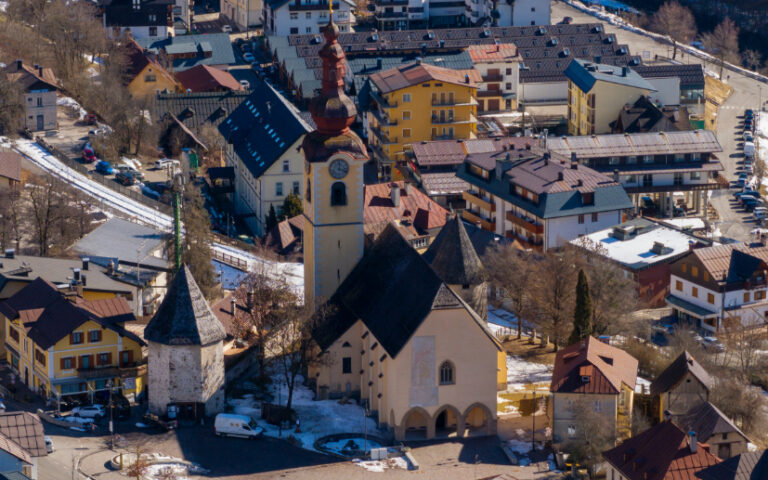
There were periods of peace, but also wars and invasions. For example, at the end of the 1400s, Tarvisio was sacked by the Turks, and it was during that period that the church you see in the town’s main square was fortified with towers, walls, and moats.
In 1758, the Bishopric of Bamberg ceded Tarvisio to the Austrian Empire.
And except for a French interlude during the Napoleonic era (early 1800s), Tarvisio remained in the Austrian Empire until 1919, when, following the end of the First World War, it became part of the Kingdom of Italy.
The Church and Other Monuments
Tarvisio is more than just nature: it is also a place rich in Alpine history and art. Among its beauties, the Church of Saints Peter and Paul stands out, with ancient frescoes and a serene atmosphere.
The church is an architectural jewel that reflects the region’s rich history and cultural influences. Founded in 1399 on the site of an earlier 11th-century chapel, the current structure was completed in 1445. In 1960, the church underwent a significant expansion toward the square, during which important frescoes were discovered and restored, including a large 16th-century Saint Christopher, now visible on the façade.
The interior of the church houses valuable works of art, such as a stained-glass window depicting Emperor Henry II the Saint, who donated the lands of the Valcanale to the Bishop of Bamberg in 1007. Among the frescoes, a depiction of Charles V on horseback, dating back to 1532, and scenes from the Last Judgement and the Life of the Virgin Mary stand out.
Beyond its artistic value, the church also served a defensive purpose: in the 15th century, it was surrounded by walls to protect the population from Turkish raids, making it one of the most interesting examples of a fortified church in the Alpine region. Municipality of Tarvisio.
Next to the church stands a striking medieval octagonal tower, built in the 15th century as part of the defense system against Turkish raids. Today, this well-preserved tower represents a precious testimony to the city’s historical past and occasionally hosts temporary exhibitions, offering visitors a fascinating insight into local history.
Behind the Church of Saints Peter and Paul are the Holy Trinity Column, a Baroque religious monument, and several Roman tombstones that bear witness to the city’s long history.
In Tarvisio Boscoverde, you’ll find the Monument to the Austrian Grenadier, erected in 1909 by sculptor Josef Valentin Kassin, commemorating the soldiers of the Habsburg army who fell during the Napoleonic Wars. The bronze statue depicts a grenadier in uniform, with rifle and bayonet, and stands on a rocky outcrop overlooking the valley.
Walking through the village, you’ll discover ancient wooden houses, historic fountains, and evidence of the border culture, where Italian, Austrian, and Slavic influences coexist.
The Territory
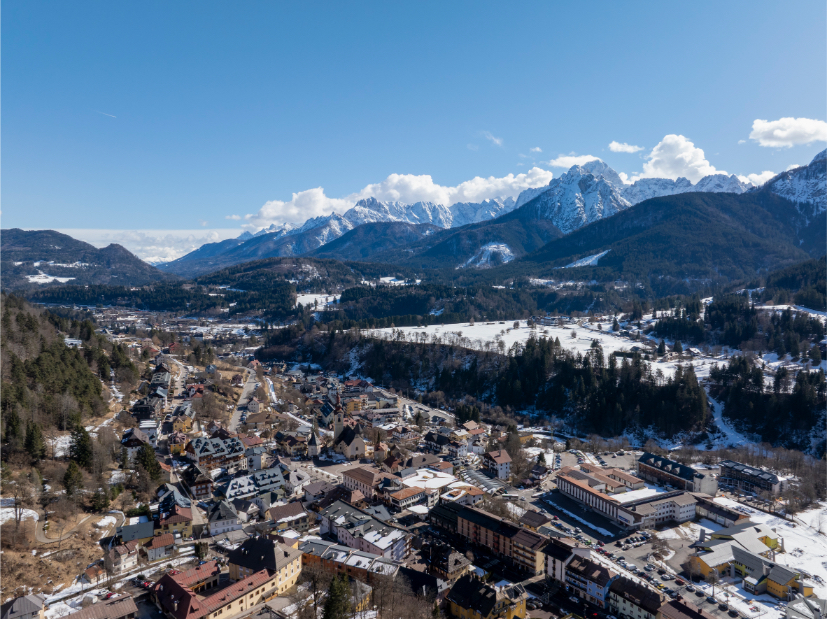
The town center is located at an altitude of 754 meters and is surrounded by the Julian Alps, which include several higher peaks—Mangart (2,668 m), Jof Fuart (2,666 m), Jof di Montasio (2,753 m), and Canin (2,587 m)—as well as lower peaks, including Mount Lussari, well-known for its sanctuary.
Magnificent valleys open up at the foot of the mountains, including Val Saisera and Val Bartolo.
The ancient Tarvisio forest covers mountains and valleys, crossed by rivers and streams (Fella, Slizza, Bartolo, etc.) and including the Fusine lakes (Lago Superiore and Lago Inferiore) and Lake Raibl (Predil).
Interesting Facts
Some interesting facts about the Tarvisio area:
- It has a very large territory, over 200 square kilometers, larger than the Municipality of Milan;
- It is one of four Italian municipalities to border two different foreign countries (Monte Forno);
- A large portion of its territory lies north of the Italian Alpine watershed (Camporosso Saddle), where the waters of the Slizza River flow into the Gail River and then into the Danube, before flowing into the Black Sea;
- It contains the largest state-owned forest in Italy, excluding parks, with 24,000 hectares of Alpine terrain, 15,000 of which are covered in productive forests;
- Despite being only 754 meters above sea level, it experiences very cold winters that can bring very low temperatures, with a recorded low of -23 degrees Celsius in 1985.
The village of Coccau
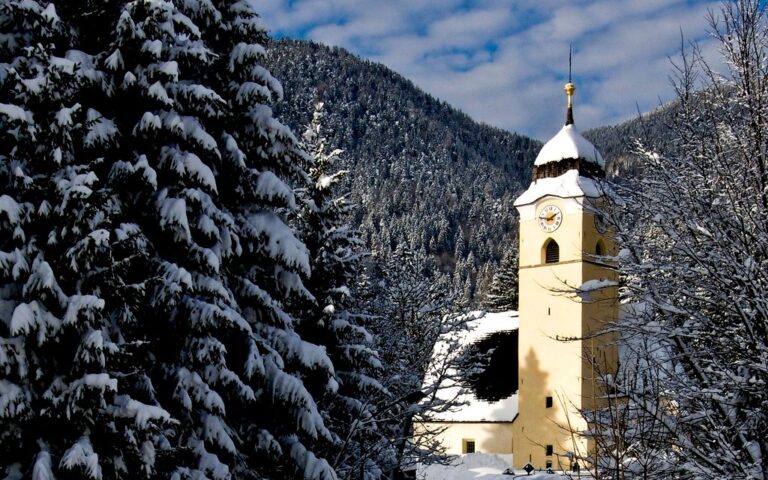
Coccau is a picturesque hamlet in the municipality of Tarvisio, located in the heart of the Julian Alps, on the border between Italy and Austria. Divided into Coccau di Sopra, Coccau di Sotto, and Coccau Valico, this town is crossed by ancient communication routes, including the historic Roman Via Julia Augusta.
The hamlet of Coccau is located north of Tarvisio and is known for having given its name to the border point with Austria, established after the end of the First World War, first at Thorl (1919) and then moved back to its current position (1924).
In Coccau Valico, you can visit the Customs Museum.
From Coccau Valico to Coccau Basso, you can travel the ancient “Roman road,” part of the route that led from Aquileia to Central Austria, now reused as the base for the Alpe Adria cycle path.
In Coccau Alto, you can visit the Church of San Nicolò, built in 1200 as a fortified church and containing frescoes of historical and artistic value.
From Coccau, you can hike the path that leads to Mount Goriane, on the border with Austria, or stroll through the meadows and forests surrounding the village.